
Community
Disney parks and cruises saw their best growth in two years. Here's how they did it
By Marcus Chen
WESH 2 Orlando

There are 18.2 million children in the United States growing up without their biological father in the home. That's one in four kids. The U.S. Census Bureau published that number. Not a blog. Not a podcast. The federal government counted them.
And while every child suffers when a parent is absent, four decades of longitudinal research from Princeton, Columbia, Northwestern, and the National Institutes of Health have converged on a finding that nobody wants to say out loud: boys without their BIOLOGICAL father during the first five years of life sustain measurable, cellular damage that follows them for the rest of their lives.
Not emotional damage. Not "he seems sad." Cellular damage. Measurable under a microscope. Published in Pediatrics. Peer-reviewed. Replicated.
If that sentence makes you uncomfortable, good. Keep reading.
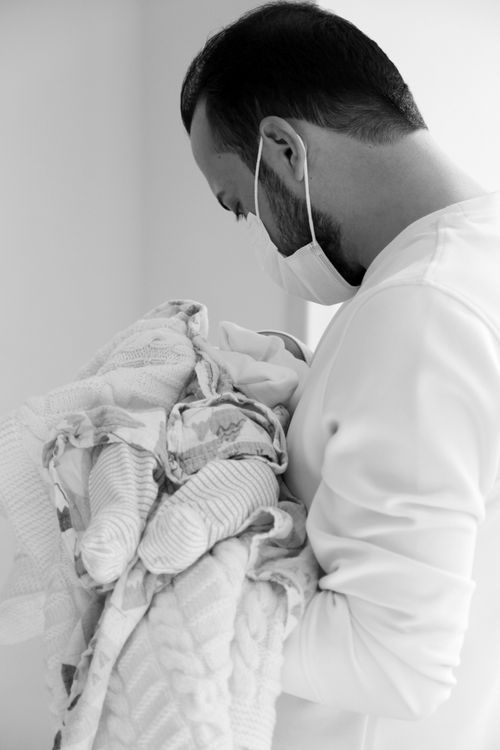
In 2017, Princeton University and Columbia University published findings from the Fragile Families and Child Wellbeing Study — a longitudinal dataset tracking approximately 5,000 children born in 20 major U.S. cities from birth through young adulthood. It is the largest and most rigorous study of its kind ever conducted.
The finding: children who experienced father loss before age 9 had telomeres that were 14% shorter than children with present fathers. Telomeres are the protective caps on chromosomes — they are the single most reliable biomarker of cellular aging and chronic stress. Shorter telomeres are associated with heart disease, immune dysfunction, accelerated aging, and early death.
But here's what made the research devastating: the effect was significantly greater in boys than in girls. And it was strongest in boys who lost their father before age 5.
Father death shortened telomeres by 16%. Father incarceration: 10%. Divorce or separation: 6%. And boys with the most stress-reactive genetic variants — those carrying certain serotonin transporter alleles — suffered 90% greater telomere damage than boys with the least reactive variants.
Read that again. A boy loses his father before kindergarten, and his cells age faster. Not metaphorically. Literally. His chromosomes are shorter. His stress response system is permanently altered. And if he has the genetic predisposition — which roughly 40% of the population carries — the damage nearly doubles.
This was published in Pediatrics, the flagship journal of the American Academy of Pediatrics. It wasn't contested. It was replicated.
The National Fatherhood Initiative has compiled nine editions of Father Facts, the most comprehensive meta-analysis of fatherlessness outcomes in existence. Here is what they found — not from opinion surveys, but from federal datasets, court records, school records, and clinical studies:
The Office of Justice Programs — a division of the U.S. Department of Justice — found that youth who never had a father in the home have the highest incarceration rates of any demographic group. Not the highest among fatherless children. The highest of any group, period.
These aren't correlations cherry-picked from a single study. These are convergent findings across dozens of independent datasets spanning four decades. The signal is so strong that arguing against it requires ignoring virtually every major longitudinal study conducted since the 1980s.

The question isn't whether father absence hurts children. It does. The question is why it hits boys harder during the first five years, and why the damage is different from what girls experience.
The answer lies in attachment neuroscience and hormonal calibration.
During ages 0–5, a child's brain is building the foundational architecture of their stress response system — the hypothalamic-pituitary-adrenal (HPA) axis. This system determines how a person responds to threat, uncertainty, and social conflict for the rest of their life. It is calibrated primarily through secure attachment to caregivers.
For boys, the father serves a role that the mother — no matter how extraordinary — cannot replicate: same-sex behavioral modeling. A boy learns impulse control, emotional regulation, and physical boundaries by watching how his father manages aggression, frustration, and conflict. The father provides what developmental psychologists call the "rough-and-tumble play" framework — physical interaction that teaches a boy where the line is between play and harm, between assertion and aggression.
Without that calibration, the Fragile Families data shows that boys with high serotonin and dopamine sensitivity scores exhibit the largest increase in externalizing behavior — aggression, defiance, risk-taking — when fathers leave. And critically, the same boys show the largest decrease in those behaviors when fathers return. The effect is bidirectional and dose-dependent. More father involvement = less aggression. Less father involvement = more aggression. The relationship is linear.

Here is the part that should keep every absent father awake at night.
A boy's self-concept — his fundamental belief about whether he is capable, worthy, and competent — is disproportionately shaped by his biological father's presence during the first five years. Not his mother's opinion of him. Not his teacher's encouragement. His biological father's presence. Not even his biological father's words. His presence.
The developmental psychology literature is unambiguous: a boy who grows up without his biological father is statistically more likely to:
A boy doesn't need a perfect father. He doesn't need a wealthy father, or a clever father, or a father who coaches his baseball team. He needs a father who shows up. Who is physically present. Who exists in the same house. The bar is not high — and 18.2 million children in America are growing up in homes where even that bar isn't met.

In 2022, Northwestern University published a landmark study in the Proceedings of the National Academy of Sciences (PNAS) — one of the three most prestigious scientific journals in the world — on the relationship between father presence and adult testosterone regulation.
The finding: boys whose fathers were absent during adolescence had significantly higher baseline testosterone as adults. That sounds like it might be a good thing. It is not. Elevated baseline testosterone in men is associated with increased aggression, higher risk-taking behavior, relationship instability, and — most damaging of all — poorer parenting outcomes in the next generation.
Boys whose fathers were present and involved in caregiving during adolescence had lower, better-regulated testosterone — and went on to be more involved, more stable fathers themselves.
The cycle is self-reinforcing. An absent father produces a son with dysregulated testosterone. That son becomes a father who is statistically more likely to be absent or uninvolved. His son's testosterone is dysregulated. And the cycle continues.
Breaking the cycle requires one thing: a father who stays.
The research doesn't say fathers are more important than mothers. It says something more nuanced: the same-sex parent is the critical mirror during early childhood, and the cross-sex parent becomes the critical differentiating influence during adolescence.
For boys ages 0–5, the father is the mirror. He reflects back to the boy what it means to be male — how to handle conflict, how to regulate emotion, how to exist in a body that will grow stronger than most of the people around him. Without that mirror, the boy builds his male identity from fragments: media, peers, strangers, guesswork.
For girls ages 0–5, the mother serves the identical function. The Journal of Research on Adolescence found that the mother-daughter bond is the closest of all four family dyads across the entire lifespan. The mother is the mirror for female identity — when that reflection is supportive, it builds self-worth. When it is distorted, absent, or critical, it creates self-perception damage that echoes through every relationship the daughter will ever have.
Then it flips.
During adolescence, the father-daughter relationship becomes the dominant influence on a girl's maturity, autonomy, and romantic attachment patterns. Research published in 2023 found that the quality of the father-daughter bond may be more influential than the mother-daughter bond in shaping how a girl navigates adult relationships.
And during adolescence, the mother-son relationship becomes the critical emotional grounding wire — fathers promote individuation and discipline, but mothers provide the emotional vocabulary that allows a teenage boy to process what he's feeling instead of externalizing it as aggression.
Both parents matter. But they matter differently at different times. And the data is ruthlessly specific about when.

American culture has spent the last 30 years building a framework that says fathers are optional. That single mothers are heroes — and they are — but that the absence of the father is a neutral event. That kids are "resilient." That love is enough.
The data says otherwise.
Love is necessary. It is not sufficient. A mother's love does not calibrate a boy's HPA axis the same way his biological father's presence does. The research has controlled for income, for education, for race, for neighborhood. The variable that moves the needle is the same every time: the biological father, physically present, during the first five years. The man whose DNA built that boy. In the same house. Every day.
This is not a political statement. It is not a judgment of single mothers, who are often doing extraordinary work under impossible circumstances. It is a statement of biological fact, published in the most rigorous journals in the world, replicated across multiple independent datasets, and consistent across every demographic group studied.
A boy needs his biological father. Under the same roof. Every single day. The younger the boy, the greater the need. And every year that passes without that presence leaves marks that don't wash off.

Here is where the conversation gets uncomfortable for the fathers who are in the house.
Showing up is the baseline. It is the minimum. But the research is clear that the quality of the biological father's presence matters almost as much as the presence itself. A father who is in the home but checked out — sedentary, disengaged, numbing himself every night — is delivering a different message to his son than a father who is actively, physically, mentally alive.
A boy doesn't just need his biological father in the house. He needs a healthy father in the house. And healthy has a specific definition that a lot of men won't like.
Healthy means active. A father who exercises, who moves his body, who demonstrates that physical discipline is a daily practice — not a New Year's resolution. A boy who watches his father run, lift, stretch, sweat is learning that a man takes care of himself. A boy who watches his father sink into a couch every night is learning that too. And while we're here — the "dad bod" is not cute. It's not endearing. It is a man who stopped trying, and his son is watching him not try. The cultural celebration of the dad bod is the celebration of a man who decided that his own health isn't worth the effort once he had kids — the exact moment when his health should matter more, not less. Your son needs to see a father who respects his own body enough to maintain it. Not for vanity. For longevity. Because a dead father at 55 from a preventable heart attack is just another form of absence — and the telomere data doesn't distinguish between a father who left and a father who ate himself into an early grave.
Healthy means engaged. On the floor with his son. Reading to him. Wrestling with him. Teaching him to throw, to cook, to build, to fail and try again. The "rough-and-tumble play" that developmental psychologists identify as the single most critical father-son interaction isn't happening from a recliner. It requires a father who is physically and mentally present — not just occupying the same square footage.
Healthy means intelligent and motivated. A father who is growing — intellectually, professionally, personally. Not stagnant. Not coasting. A boy watches everything. He watches whether his father reads books or just scrolls a phone. He watches whether his father has ambitions or just complaints. He watches whether his father builds things or just consumes things. He watches whether his father is curious about the world or bored by it. A boy needs to see a man who is driven — who wakes up with purpose, who has goals, who is actively building something with his life. Not a man who peaked in high school and has been running out the clock ever since. Children model what they see. A motivated, intellectually engaged father produces a motivated, intellectually engaged son. A lazy, checked-out father produces exactly what you'd expect.
Healthy means sober. Let's say it plainly: a couple of drinks every night is not healthy. Two beers after work "to take the edge off" is not healthy. Three glasses of wine "to unwind" is not healthy. It is a pattern, and that pattern has a name, and most men who have it refuse to say it out loud. And here's the connection nobody makes: the dad bod and the nightly drinks are the same disease. They are both symptoms of a man who has stopped being disciplined about his own life. The gut comes from the beer. The beer comes from the avoidance. The avoidance comes from a man who has decided that comfort matters more than growth — and his son is absorbing every single second of it.
A boy watching his biological father reach for a bottle to regulate his emotions every evening is learning the exact coping mechanism that the research links to substance abuse in fatherless boys — except this boy isn't fatherless. He's watching his father teach him, night after night, that the answer to stress is a substance. The data on parental alcohol modeling and adolescent substance initiation is devastating and unambiguous: children of daily drinkers are significantly more likely to develop alcohol use disorders themselves, even when the parent's consumption is within "moderate" guidelines. The dad bod, the nightly drinks, the couch, the phone — it's all one picture. And the boy sees the whole picture.
Healthy means affectionate. A father who hugs his son. Who tells him he loves him. Who is not afraid to hold him, to comfort him, to let him cry. The research on paternal affection and male emotional development shows that boys who receive regular physical affection from their biological father have better emotional regulation, higher self-esteem, and lower rates of aggression and depression through adolescence and into adulthood. A generation of men were raised to believe that hugging your son makes him soft. The data says the opposite: it makes him strong.
A boy needs a biological father who is present, active, engaged, sober, smart, thriving, and affectionate. Not perfect — nobody is asking for perfect. But healthy. Genuinely, measurably, visibly healthy. Because a boy doesn't listen to what his father says. He watches what his father does. And he becomes it.
This isn't a big-city problem. Father absence cuts across every zip code, every income level, every race. In suburban communities across Minnesota, the absence is often invisible — the father who moved to an apartment across town after the divorce, who sees his kids every other weekend, who is technically "involved" but not present in the daily architecture of his son's life.
The research doesn't distinguish between dramatic abandonment and quiet withdrawal. The telomere data doesn't care whether Dad left because of addiction or because of a custody agreement. The boy's stress response system doesn't know the difference between a father who vanished and a father who shows up on Saturdays. Daily presence is the variable. Everything else is noise.
If you are a father reading this: the most important thing you can do for your son is not buy him equipment, not fund his college account, not take him on vacations. It is to live in the same house and be there when he wakes up in the morning. That's it. That's the finding. Four decades of research, thousands of children tracked, millions of dollars in grant funding, and the conclusion is breathtakingly simple.
Show up. Stay. Be there.
The data says nothing else comes close.
Sources: Princeton University Fragile Families and Child Wellbeing Study (Pediatrics, 2017) • Northwestern University PNAS Study on Adolescent Sensitive Period and Testosterone (2022) • National Fatherhood Initiative, Father Facts 9th Edition (2024) • U.S. Census Bureau Current Population Survey (2023) • Institute for Family Studies, "Life Without Father" • U.S. Department of Justice, Office of Justice Programs • Journal of Research in Crime and Delinquency • Journal of Research on Adolescence • U.S. Department of Health and Human Services
Ad Space Available
mid-article · 728px
By Marcus Chen
WESH 2 Orlando

By Marcus Chen
WESH 2 Orlando

By Marcus Chen
ClickOrlando Local

By Marcus Chen
WESH 2 Orlando